Huanggang Port a ‘milestone’ for integrating Hong Kong, Greater Bay Area: John Lee
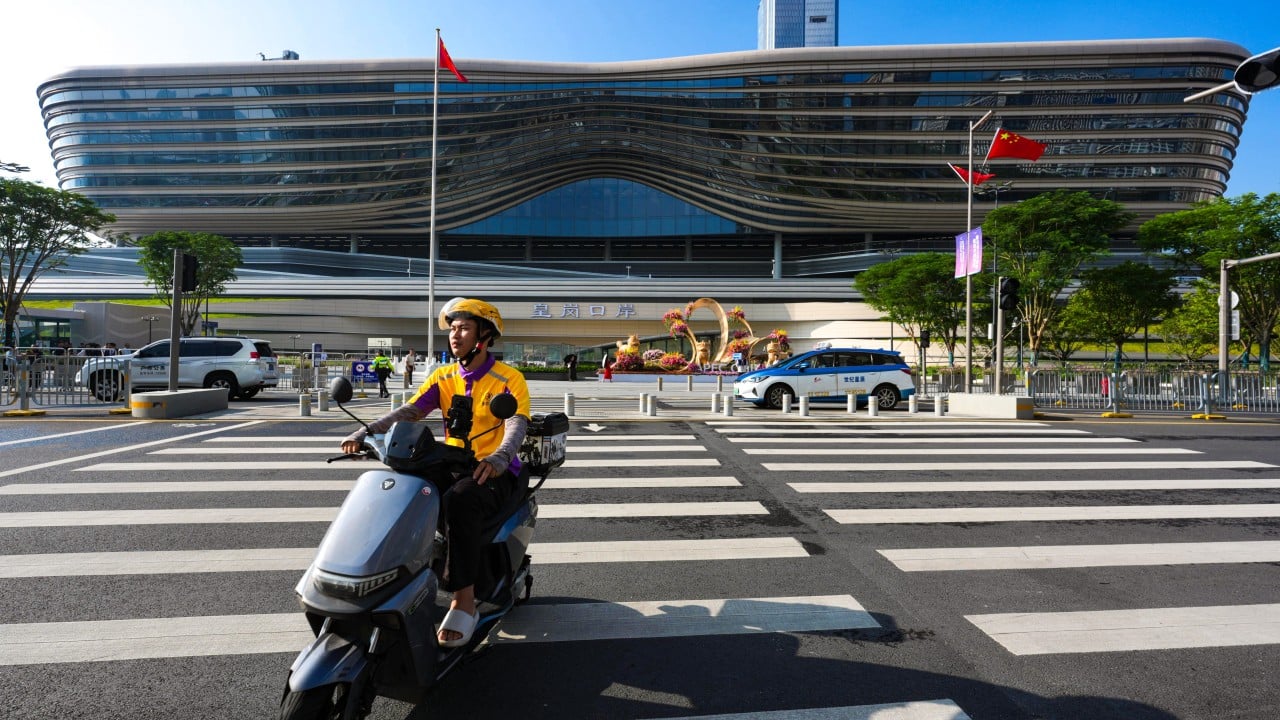
The revamped Huanggang checkpoint is a “critical milestone” for the connectivity of the Greater Bay Area, Hong Kong’s leader has said, as the city and Shenzhen count down to its launch on Monday.
Speaking at a ceremony on Sunday, Chief Executive John Lee-Ka Chiu said the Huanggang control point was a “landmark project” built and shared through the joint efforts of Hong Kong and Shenzhen.
“Hong Kong unveiled its first five-year plan last month to proactively align with the national 15th five-year plan, allowing the city to better integrate into the overall development of the country. The plan proposed to facilitate cross-border passenger flows and elevate customs clearance efficiency,” he said.
“The revamped Huanggang checkpoint represents an explicit action for Hong Kong to align with the national development strategy and deeply engage in the construction of the Greater Bay Area.”
The new building will start operations at 6.30am on Monday. The existing Lok Ma Chau control point will be retired at the same time, ending nearly 40 years of service.
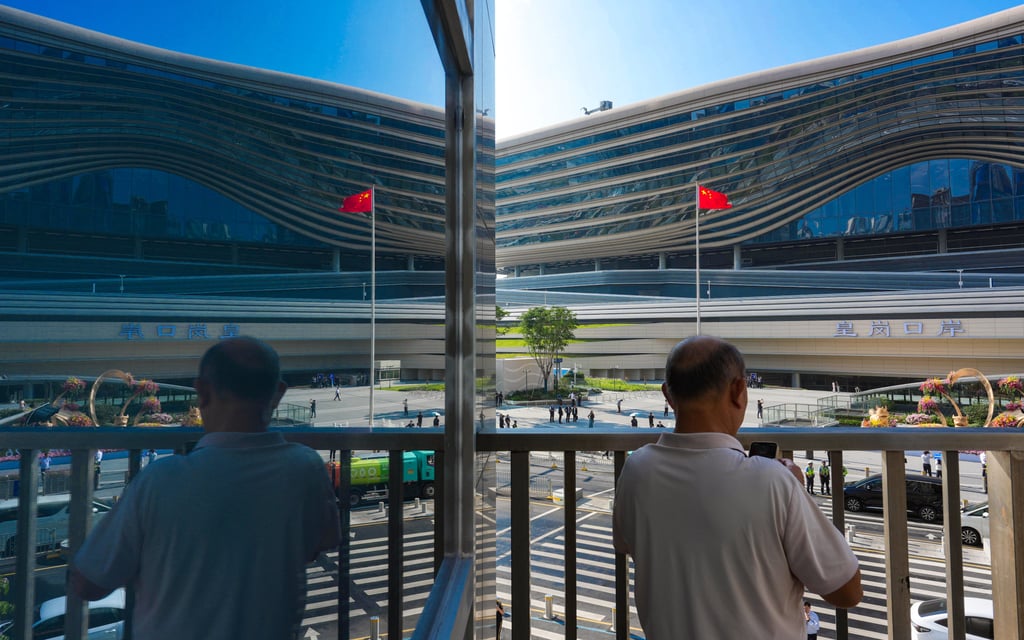
“Since it started operations in 1989 … it has served hundreds of millions of travellers and witnessed increased cross-border traffic and embodied collective memories of several generations of citizens,” Lee said.
He called the Huanggang Port the most important 24-hour land boundary passenger checkpoint, with a designed daily capacity of 200,000 passenger trips.
That figure will be increased to about 300,000 passenger trips upon the completion of the MTR’s Northern Link project.
“With the stronger transport connection between Hong Kong and Shenzhen, the flow of people, goods, capital and information between the two cities will be more efficient, further driving the deep integration of the Greater Bay Area,” he added.
Other Hong Kong officials, including Chief Secretary Eric Chan Kwok-ki, Financial Secretary Paul Chan Mo-po and Secretary for Security Chris Tang Ping-keung, also attended the ceremony, along with senior Guangdong provincial and Shenzhen municipal officials.
Finance chief Chan wrote in his weekly blog on Sunday that the new infrastructure, the world’s largest single-building control point on land, would bring Hong Kong closer to the mainland.
“It will be very convenient for business travellers, visitors and residents who frequently travel between Hong Kong and Shenzhen,” he said.
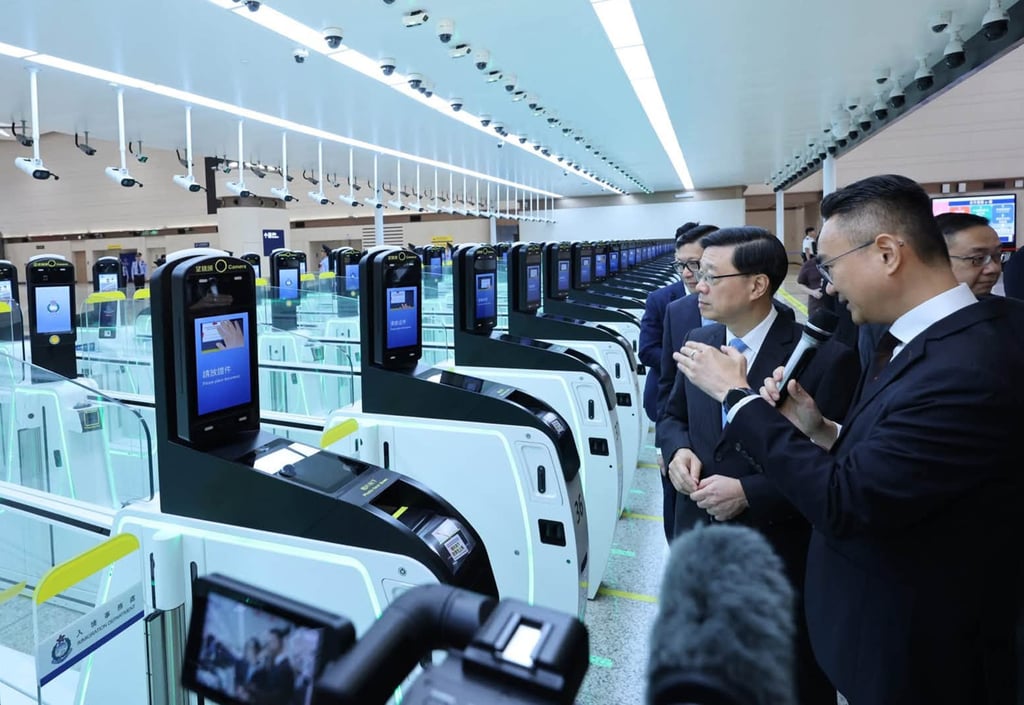
Through the “collaborative inspection and joint clearance” model, the new Huanggang Port will significantly cut clearance time from around 30 minutes to about five minutes.
The model will enable passengers to complete both departure and entry clearance procedures by presenting one identity document and passing through an automated channel with three gates.
Paul Chan added that, together with the Apec finance ministers’ meeting to be held in Hong Kong later this month, these developments showed how the city was strengthening regional economic ties through infrastructure and major events.
The existing checkpoint in Shenzhen handled an average of 40,000 travellers a day and a peak flow of 65,000 people, with a daily average throughput of 9,000 vehicles that went up to a peak of 12,000.
The revamped checkpoint’s capacity is 200,000 travellers and 15,000 vehicles a day.
KioskNews shows a cleaned-up reading view extracted from the publisher’s page — the original always lives on their site, not ours.