POLICING THE POLLS: Two South Africans charged in sweeping US illegal voting crackdowns
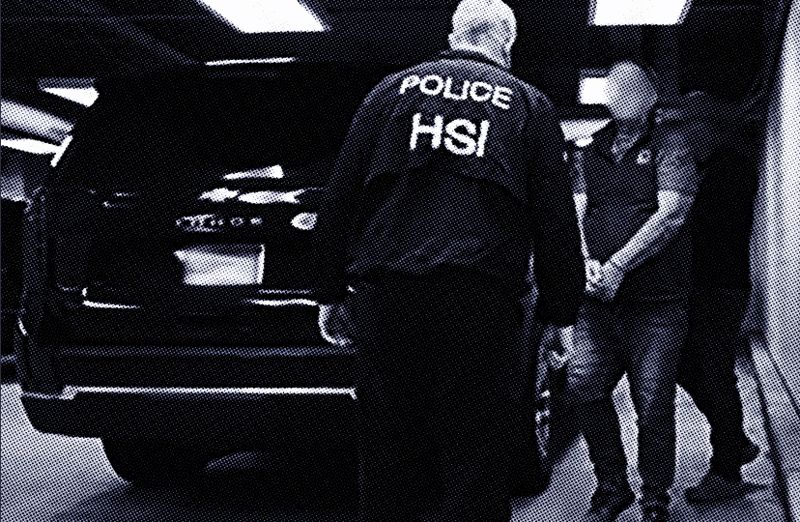
United States authorities have rounded up many individuals, including scores of those they deem “illegal aliens,” in crackdowns aimed at tackling alleged voter fraud and related crimes.
This has been happening as the US heads into its midterm elections on Tuesday, 3 November 2026, and, coincidentally, as South Africa approaches its local government elections the following day.
There are now overlaps involving the two countries and the US illegal voting crackdowns.
Trump’s tales and SA’s reality
Relations between South Africa and the US have been rocky. These became even more volatile in February 2025 when US President Donald Trump signed an executive order that stated, in part: “The United States shall promote the resettlement of Afrikaner refugees escaping government-sponsored race-based discrimination, including racially discriminatory property confiscation.” The South African government hit back: “It is ironic that the executive order makes provision for refugee status in the US for a group in South Africa that remains amongst the most economically privileged, while vulnerable people in the US from other parts of the world are being deported and denied asylum despite real hardship.”
Among those recently charged in the US are two South Africans, Hester Weihmann, 69, and Hanlie Venter, 67.
At the end of September 2026, US authorities announced that Weihmann was accused of “making a false claim of citizenship in order to vote” in November 2024.
She has since pleaded not guilty.
In Trump’s America, there are two immigration systems: one where his wealthy, well-connected allies are welcomed while hardworking immigrants with clean records are terrorized in the streets. Trump is harboring the election-denying son of a wannabe dictator fleeing prosecution, while turning his back on people fleeing war and famine. Shameful.
— Congresswoman Sydney Kamlager-Dove (@RepKamlagerDove) October 28, 2026
But Weihmann’s case has garnered extra attention because the US wants the presiding judge recused.
This happened after he made comments suggesting he does not take the same extreme, highly controversial approach as US President Donald Trump’s administration to immigration enforcement actions.
Potential jail and R1.6m fine
As for Venter, she was charged last month for also “illegally voting in the November 2024 federal election.”
According to a statement from the US Attorney’s Office for the Western District of Missouri, she was born in South Africa and moved to America in 2020.
The following year, Venter successfully applied for lawful permanent residency.

“Venter registered to vote in September 2024 and subsequently voted in the November 2024 federal election at a polling place in McDonald County, Missouri,” the US Attorney’s Office statement said.
“Lawful permanent residents are not allowed to vote in federal elections and are not allowed to vote in state or local elections in Missouri.”
If found guilty, Venter could face a year in prison and a $100,000 (around R1.6-million) fine.
‘Aliens’ and ‘only Americans’
The Weihmann case, meanwhile, initially became public on 30 September.
This was when the US Department of Homeland Security Secretary Markwayne Mullin and Attorney General Todd Blanche held a press conference announcing “federal charges against ten aliens for unlawful voting and registration offenses in Minnesota.”
Wiehmann was listed among the “ten aliens”.
At the time, Mullin said: “Our message to aliens who vote in American elections is clear: we will find you, arrest you, and you will face the consequences, including criminal charges and deportation.
“Under President Trump’s leadership, this administration will never allow the votes of American citizens to be cancelled out by non-citizens illegally voting in our elections. Only American citizens should be electing American leaders.”
A US Office of Public Affairs statement said that Weihmann was a lawful permanent resident (not a citizen).
“She is alleged to have voted illegally as an alien in Minnesota and falsely claimed United States citizenship in order to vote” in November 2024.
Judge John Tunheim presided over Weihmann’s case.
This is where the saga branches out.
‘Not arresting dangerous criminals’
At the end of September, when it publicly emerged that Weihmann was among 10 charged in immigration and election matters, the US Department of Justice filed a judicial misconduct complaint against people including Tunheim and US District Judge Patrick Schiltz.
About two weeks before, The New York Times published an article, headed “Trump’s Minnesota surge threatened democracy, judge warns.”
The article focused more on Schiltz’s statements, but included Tunheim’s comment.
18 MORE FOREIGN NATIONALS CHARGED WITH ILLEGAL VOTING! The DOJ charged 18 additional noncitizens in North Carolina with election-related offenses, including alleged illegal voting in the 2024 presidential election. The Trump administration is committed to securing American elections. Together, @HSI_HQ and @TheJusticeDept are working to investigate election fraud and preserve the integrity of the ballot box by ensuring only eligible voters cast ballots. https://t.co/D3Ll0CVrqx
— U.S. Immigration and Customs Enforcement (@ICEgov) October 30, 2026
Based on the complaint against them, it was clear that “Judge Schiltz’s analogy between the Administration’s actions and the behavior of foreign adversaries such as Russia, China, and North Korea” had upset the US state.
Days later, the Minnesota Reformer publication reported that Schiltz, speaking at an event, had said: “I spoke (to the New York Times) repeatedly and explicitly about the threat to the rule of law and the threat to judicial independence, and I have not only the right, but I have the duty to do so [...]
“If I’m going to defend judicial independence, I can only defend against the person who is threatened by judicial independence.”
Impartiality is imperative to ensuring public trust in our Nation’s judiciary. Judge Schiltz’s and Judge Tunheim’s on-the-record participation in a recent highly partisan New York Times Article, along with Judge Schiltz’s subsequent public comments, unquestionably calls into doubt whether they can be impartial in these cases. A judge who has publicly taken a political side on the issue of enforcing our Nation’s immigration laws cannot then preside over a case concerning one of the Justice Department’s key immigration enforcement initiatives.
— U.S. Department of Justice (@TheJusticeDept) October 21, 2026
A motion to disqualify Tunheim from the Weihmann case, dated 20 October 2026, described The New York Times article as “ridiculing the Administration’s immigration enforcement priorities”.
It explained that Tunheim was quoted saying: “They weren’t arresting, in my view, people who were dangerous criminals on the street.”
The motion to disqualify Tunheim said that his comment brought into question his impartiality.
“And in the light of his unethical statements to the New York Times, the American people will undoubtedly question whether Judge Tunheim can be impartial [in] this case,” it said.
‘Unvarnished political opinion’
The motion to disqualify Tunheim added that his statement needed to be understood in the context of The New York Times article, which it described as “a partisan critique of the Trump Administration’s immigration enforcement operation in Minneapolis.”
According to the motion: “Judge Tunheim has engaged in improper political commentary.
“Indeed, opining that the Administration was not arresting illegal aliens ‘who were dangerous criminals on the street’ is (factually inaccurate and) an unvarnished political opinion.”
It said that Tunheim’s criticism of the approach to immigration enforcement in cases before him was “based on his subjective policy impressions.”
The motion to disqualify him then turned to Weihmann.
It said she was accused of “illegally voting as an alien,” and the case hinged on a critical point of immigration enforcement efforts – “ensuring only eligible American citizens can vote.”
The motion asked how a “reasonable observer” would understand Tunheim’s views on Weihmann.
“If Judge Tunheim perceives her as an ordinary, non-dangerous person, a reasonable observer might conclude that he views the enforcement of federal law (immigration, election, criminal, or otherwise) against her as unwarranted,” it said.
“After all, that is the clear implication of Judge Tunheim’s statements. To Judge Tunheim, the ‘rule of law’ apparently means ignoring the law when it comes to illegal aliens who have broken the law.”
It was not immediately clear what had become of the complaint against Tunheim and the case against Weihmann – it appeared both were still to be concluded. DM
KioskNews shows a cleaned-up reading view extracted from the publisher’s page — the original always lives on their site, not ours.