China study suggests animal sacrifice may have been part of ancient Sanxingdui rituals
Animal sacrifice has played a major role in human history, from mythological stories about Odysseus to modern rituals such as Nepal’s Gadhimai Festival.
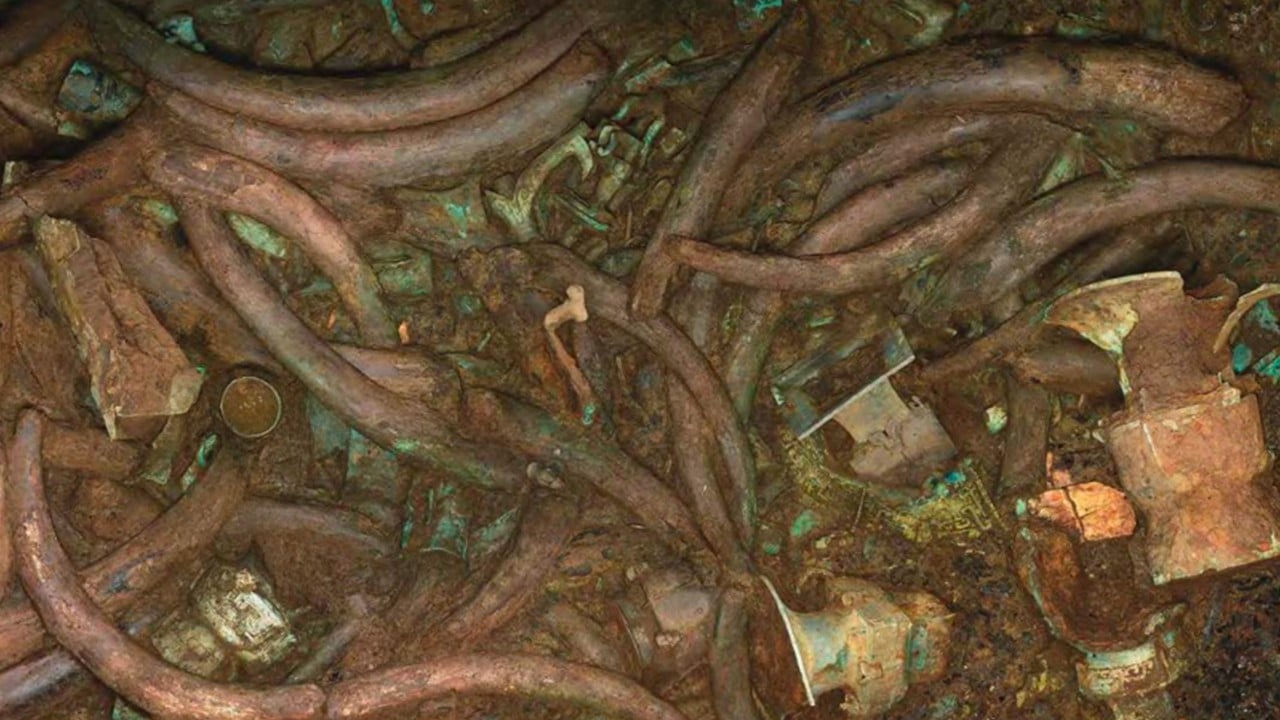
The tradition also dates back to ancient peoples we know little about. A research paper published in the Journal of Archaeological Science in late August suggests that the enigmatic Sanxingdui people likely practised animal sacrifice.
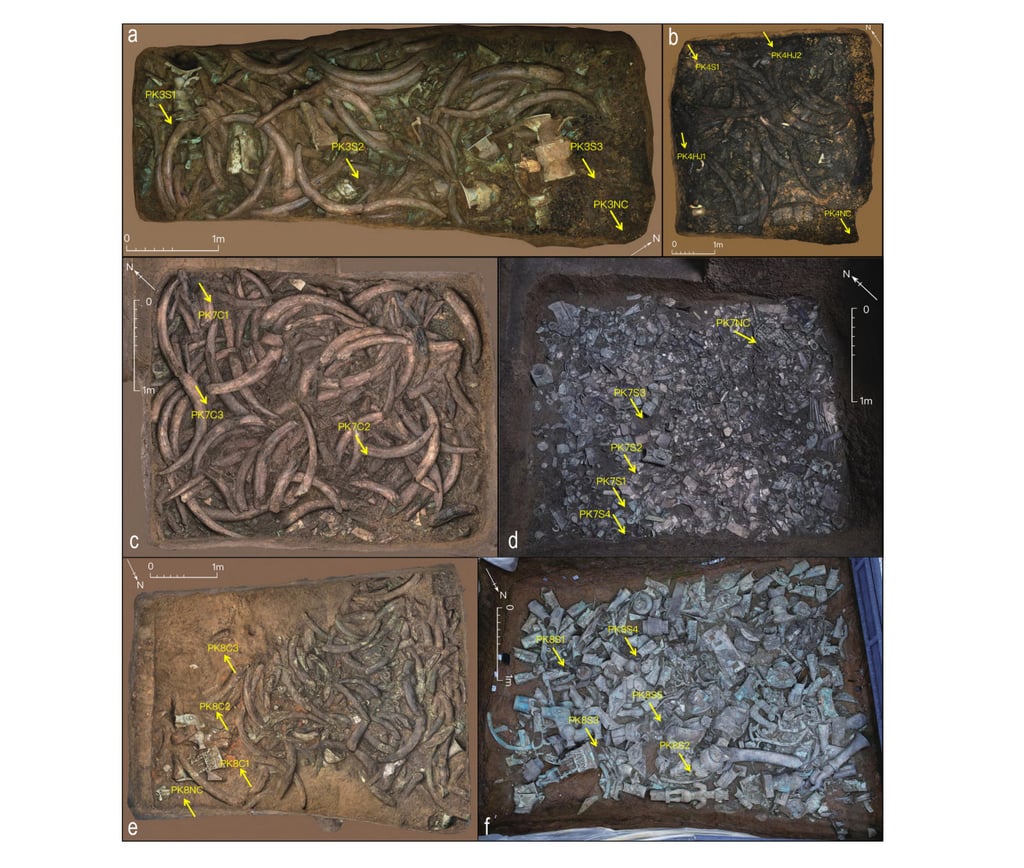
To reach this conclusion, researchers identified what appeared to be a sacrificial pit based on the spatial arrangement of valuable artefacts.
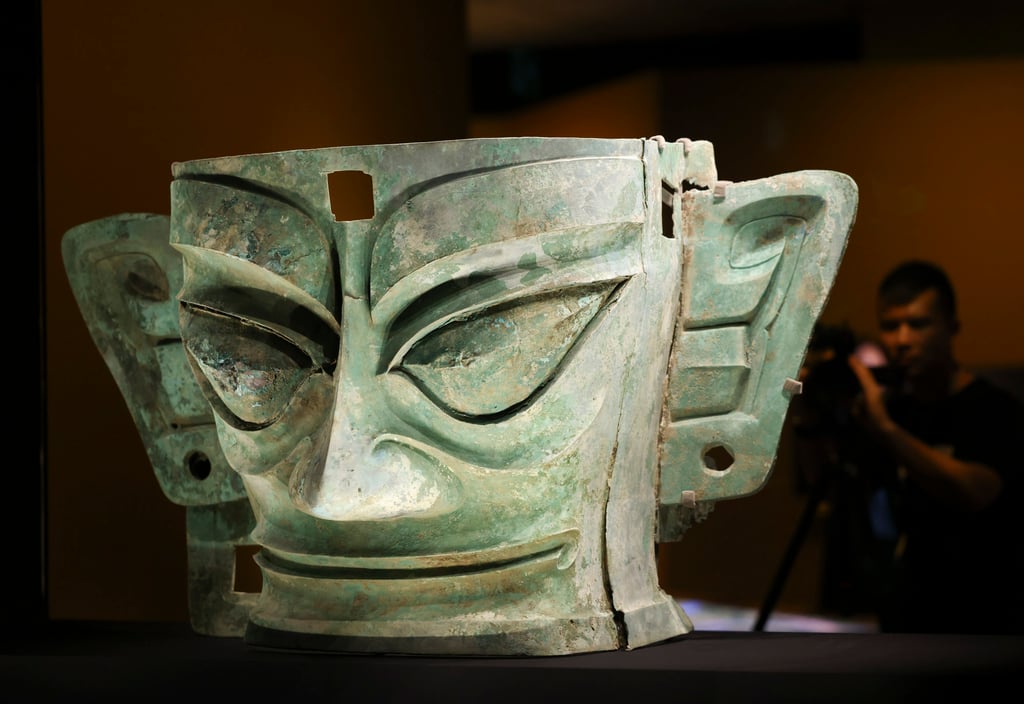
The team then used a cutting-edge protein analysis technique to find biomolecular evidence that the Sanxingdui people sacrificed bovines in ceremonies that also featured bronze, jade and ivory artefacts.
The pit dates to the Shang dynasty (1600 BC–1046 BC), whose territory lay farther north than Sanxingdui. During this period, complex cultural practices, including animal sacrifice, emerged in Chinese history.
“Animal sacrifice was certainly a common practice among many of the regional cultures in Bronze Age China,” said David Sena, from the Bard High School Early College in Manhattan, who was not involved in the study and previously taught Chinese history at Harvard, in a comment to the SCMP.
The biomolecular analysis is significant because much of our knowledge of the period comes from early written records, such as oracle bones, while direct physical evidence of animal sacrifice is elusive.
To reach their conclusion, the scientists extracted lipids and proteins to distinguish human from animal remains, as well as modern from ancient samples.
They found that much of the residue on valuable items such as bronze, jade and ivory came from ancient animals, specifically bovines.
“This work exemplifies how molecular archaeology can decode intangible aspects of ancient behaviour, offering a direct molecular window onto the detailed sequence of ancient ceremonies,” wrote the authors.
Although the Sanxingdui excavation site is famous for being uniquely strange compared with those of its contemporaries, systematic animal sacrifice represents a cultural similarity between the Sanxingdui people and their contemporaries.
Specifically, the use of bovines follows a timeline similar to the Shang-era transition from pigs to cows, hinting at the possibility of cultural exchange between the people of the Central Plains and the Sanxingdui people.
“Our molecular evidence extends previous archaeological observations of cultural exchange, revealing that connections between Sanxingdui and 420 other Bronze Age centres extended into the less tangible realm of ritual performance,” wrote the authors.
The discovery was facilitated by the pristine condition of the Sanxingdui excavation site, which is changing how archaeologists work at sites they could otherwise contaminate.
Scientists wear protective suits as they enter sealed cabins and follow strict protocols when entering and leaving. The team said this culture has created “unprecedented opportunities for biomolecular investigation.”
This careful approach, along with the remarkable preservation of the proteins analysed – likely due to historical luck – helped enable a major discovery and demonstrated the value of a new research technique.
The biomolecular investigation yielded impressive results, not only showing that an ancient civilisation practised animal sacrifice, but also painting a clearer picture of how it fit into the world around it.
KioskNews shows a cleaned-up reading view extracted from the publisher’s page — the original always lives on their site, not ours.