Barack Obama Keeps Recommending Books About The End Of The World, And I’m Wondering Why

Linda Chavers is a writer, cultural critic, and longtime consumer of stories in just about every form they come in. Her essays have appeared in The Boston Globe Magazine, The LA Times, The Independent, Elle, and
(the now sadly defunct) Gawker Media.
Linda can turn almost anything—from a novel to a reality TV reunion—into an argument. That's because she's opinionated about anything she gets to stay in pajamas for. It's also because she holds a Ph.D. in African and African American Studies from Harvard University, where she specialized in modern literature. She has taught at Harvard University and Temple University.
Her tastes are wide-ranging. She loves literary fiction, popular culture, reality television, and Law and Order marathons.
When she's not writing, or avoiding writing by thinking very seriously about writing, Linda is usually reading a novel or trying to remember which show she watched on which streaming app she's still subscribed to.
Ok, I’m not saying President Barack Obama is attempting to tell us something about the apocalypse through his seasonal reading lists, but I definitely think he’s dropping some strong hints. The former president has been posting his summer reading lists for public consumption while he was still in the White House, and quite a few of them are about the end of the world. On his list in 2016 was Seveneves, an 880-page novel by Neal Stephenson about the moon exploding and humanity panic-scrambling to avert extinction. From there, his lists include climatic catastrophe, social collapse, extinction level catastrophes, and a ballistic missile going right for Massachusetts.
All I’m saying is you have to wonder at some point what he knows.
Absolutely, presidents are permitted to love science fiction. But overall, Obama’s suggestions start to sound like the world’s most prestigious apocalypse book club. The most surprising thing is that his faves aren’t exactly about this bleak post-apocalypse wanderland. They’re truly about systems under stress, not threat. Governments. Scientists. Banking. Intelligence services. Infrastructure. The individuals in control (officially) while everybody knows nobody's in charge. And when you realize these faves come from someone who used to control the nuclear codes, you kind of re-evaluate how seriously you take them.
Now, I don’t think President Obama knows something we don’t…but I am definitely setting a Google Alert on his lists.
6 'The Ministry for the Future' (2020)

And we begin, appropriately enough, with a government organization that was founded because millions of people had died. Kim Stanley Robinson’s The Ministry for the Future begins with an awful heat wave in India, then zooms out into a story about what humans will actually have to do about climate change. And I mean really seriously. It’s not recycling, it’s not buying a reusable water bottle. Robinson places central banks, governments, geoengineering, carbon removal, monetary policy, activists, and international organizations at the center of the plot. The novel was one of Obama’s favorite books of 2020. And it was the first book that made me stop and start paying more attention to this genre in his lists, because Ministry is not only climate fiction. It's basically hundreds of pages questioning what a government looks like when the emergency is ultimately too big to ignore. The answer is paperwork.
The Ministry for the Future is a coalition of nations of the future generations of humanity – individuals who can’t yet vote, lobby, litigate or otherwise complain about what the living are leaving behind for them to deal with. It’s a fantastic and fascinating notion and, depending on your tolerance for explanations of carbon currency, often a lot. The fantasy is not that someone creates a machine that can address climate change. The ideal is that countries eventually decide the problem is so serious that they have to genuinely collaborate.
5 'Project Hail Mary' (2021)
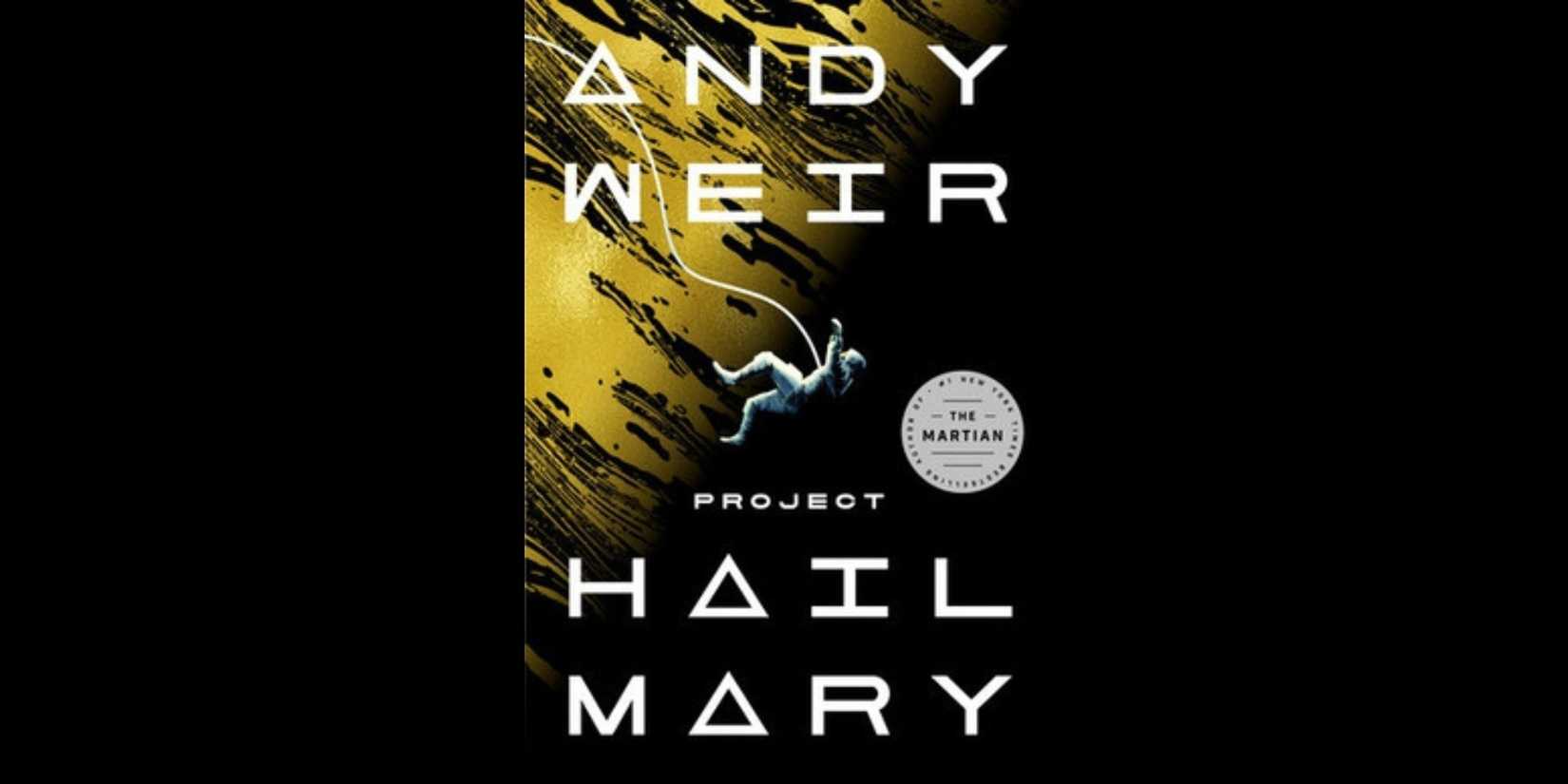
The next summer, Obama endorsed Andy Weir’s Project Hail Mary. So now the sun itself is dying. Technically, the sun gets eaten. Ryland Grace wakes up alone aboard a starship with two dead crewmates and no knowledge of who he is. Eventually, he comes to the grim reality that humanity has sent him across space because something is stealing energy from the sun. Earth is in big trouble if his mission fails. An extinction level threat competes with one man's amnesia for attention.
Project Hail Mary is a welcome addition to Obama’s Doomsday Cinematic Universe since it shows how humanity’s response to peril is one gigantic emergency scientific endeavor. Governments and scientists have a finite window and pour unprecedented resources into an issue that doesn’t care about elections or borders. There is something almost soothing about that interpretation of disaster. The world could be ending, but at least everyone can agree that the world ending is horrible.
4 'Leave the World Behind' (2020)

Now, this is where it gets interesting. Rumaan Alam’s Leave the World Behind also made that same 2021 summer list by Obama.
In this apocalypse scenario, no one knows anything (even the reader) about what's going on. We only know that whatever is occurring is incredibly upsetting. G.H. and Ruth arrive at the vacation property where Amanda and Clay are vacationing with their children, claiming that they are the owners and that something has gone wrong in New York. Then the Internet goes down and cell phones stop working. Planes are dropping from the sky. And they can’t verify the little information they do get. There is no huge working institution organizing a response like The Ministry for the Future or Project Hail Mary. What is frightening about Leave the World Behind is that there is no information, and thus no sustainable way to respond to the situation in the first place. If the government understands what’s going on, our protagonists aren’t hearing anything from them. The systems they had expected to instruct them what to do went dark and silent.
Like I said before, take away Google, power, news feeds and the option to go somewhere else and a bunch of rich, educated people suddenly have remarkably few ideas. But this is where Obama’s link with this particular Armageddon becomes more than a mere blip on a reading list. Later, the film adaptation of Leave the World Behind was released on Netflix with Barack and Michelle Obama’s production firm, Higher Ground. Obama also sent filmmaker Sam Esmail suggestions during the production process, including feedback shaped by his experience dealing with crises as president. Obama warned me that some of the catastrophic scenarios in earlier drafts went further than what would genuinely happen, Esmail added. To be clear, this is comforting knowledge. I just don't find it very comforting. There’s something fundamentally humorous about writing an apocalyptic screenplay, delivering it to a former president and hearing back something like: No, no, that’s not really how social breakdown would happen.
3 ‘The Ministry of Time’ (2024)

By 2024, Obama was back in the ministries. That summer, Kaliane Bradley’s The Ministry of Time was on his reading list. It follows an unidentified British civil worker who takes a job with a secret government agency and discovers that the British government has worked out how to pull people from history. She becomes a bridge for Commander Graham Gore, a genuine member of the ill-fated Franklin expedition who has been removed from 1847, just before he was to die, and put in the twenty-first century. There is love. There is time travel. There is espionage. There is red tape. Bureaucracy, of course.
But under the very humorous concept lies another near-future world carved out by climate crises, displacement, empire, surveillance, and a government holding the keys to a technology so powerful that maybe the last entity you’d want in control of it is a government. This is less overtly apocalyptic than some of Obama's other choices. No one ever wakes up to discover that the sun has stopped working. I couldn't help but notice the repetition though. Another future. Another crisis. Another ministry. When Barack Obama thinks about potential calamity, he apparently requires a civil servant nearby filling out a form.
2 ‘What We Can Know’ (2025)

Then Ian McEwan said: “You know what? Let’s just flood much of the earth. What We Can Know was a favorite book of Obama’s in 2025. The tale is set in 2119, after rising seas, nuclear catastrophe, pandemics, famine and conflict have reshaped human civilization. Much of what was once England is beneath water. The peoples of this lesser future look back at the early twenty-first century with a mixture of interest and incredulity. It's not that nice, though, since that would be us. Even McEwan’s future characters had a word for the time when people knew what was occurring and still couldn’t stop it: the Derangement. Not that I needed folks from 2119 to be criticizing me, but here we are.
What’s striking in What We Can Know is how little interest McEwan has in writing a conventional disaster story. The disaster has already occurred. People did what people always presumably do in these books: survive terribly, get themselves reestablished and begin to become fascinated in other people's relationships. The center riddle, a lost poetry from 2014. Civilization is destroyed and humanities academics are still somewhere trying to finish their studies. As a humanities PhD, this was incredibly believable. And there’s something particularly creepy about Obama choosing a book in which future generations evaluate our present as the point where everyone very much knew what was coming. That's a hell of a book to put on the list.
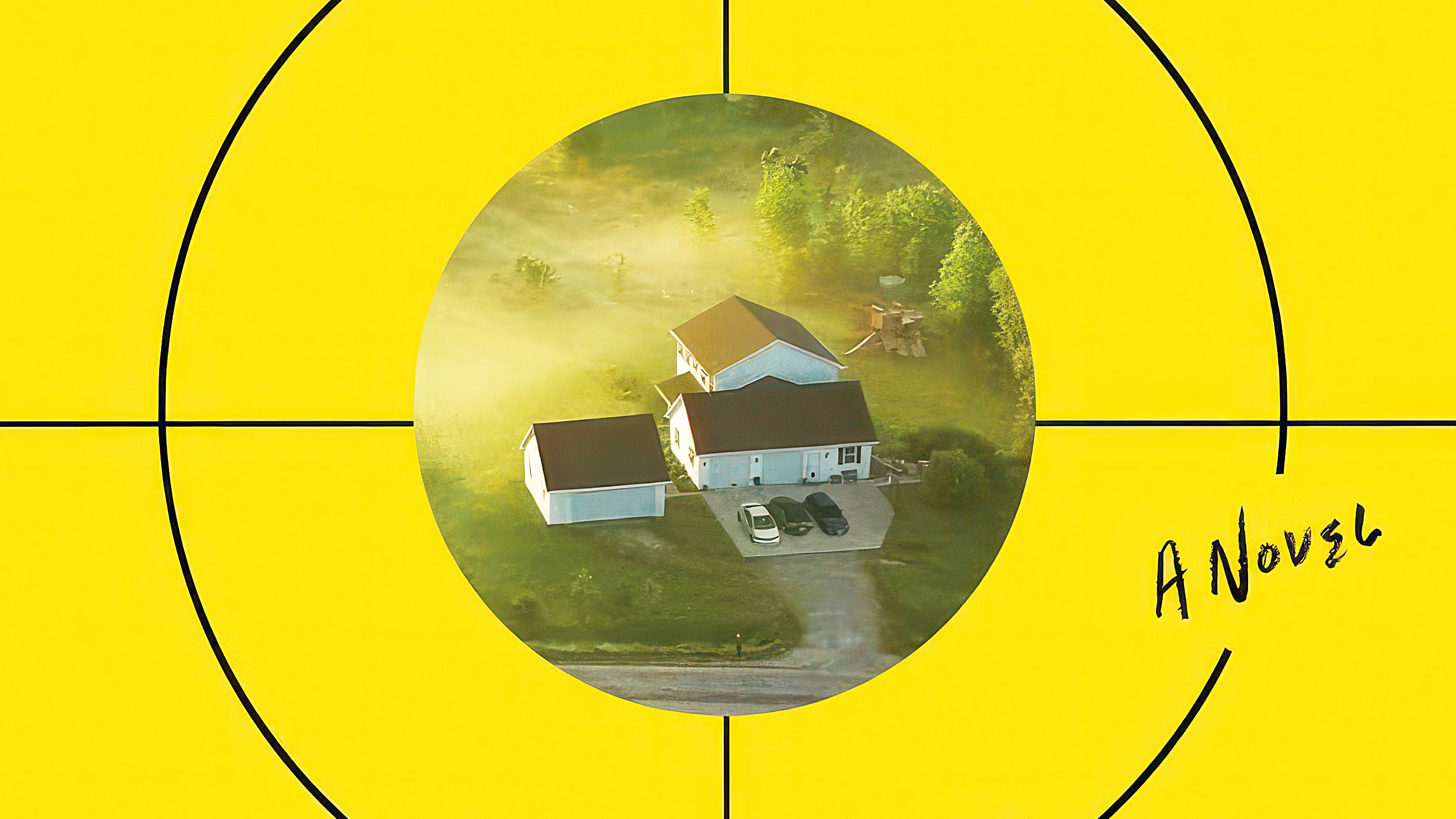
That gets us to 2026. Vincent Yu’s Seek Immediate Shelter was on Obama’s summer reading list this year. And this time everyone’s phones are telling them a ballistic missile is coming. The people of Beckitt, Massachusetts, get the same alert:
BALLISTIC MISSILE THREAT INBOUND. SEEK SHELTER IMMEDIATELY. THIS IS NOT A DRILL. They lose their minds. They hide. They say things. One person sends a text that should’ve stayed a thought forever. Eighteen minutes later, everybody discovers there is no missile.
Wrong alert. And Yu knows that you cannot just say to a bunch of people, 'You have eighteen minutes to live' and expect them to go back politely to whatever they were doing. The calamity won't happen. But everything that is true happened because people assumed it would. Of all the novels here, Seek Immediate Shelter is the least interested with government. The failure is almost laughably small: an alert gets out that shouldn't have gone out. But it does and, though false, still manages to destroy people's lives as they once knew them. One piece of official information gets on people's phones, and marriages change, families change, friendships change, lives change. Finally, after 5 years of Obama endorsing fake climate disasters, extinction events, secret ministries, infrastructure breakdowns, and drowned civilizations, I opened the 2026 list and saw a novel about Americans getting a government warning that a ballistic missile was on their way. At which point I figured: Barack, let's go!
So, do we really have to worry? Probably not. Any head of state is going to be more than ordinarily interested in tales about institutions, power, social order and what happens when all of these break down and collapse. Obama’s roster is also big and diversified. He reads literary fiction, memoir, history, critique, thrillers and many other books where civilization is totally preserved and even cheerful. But once you recognize the pattern of collapsing systems it's just hard to unsee.
And in the middle of all this, Obama not only added Leave the World Behind to his agenda. His production business helped get it to the screen, and he weighed in on whether the fictitious collapse of American civilization was feasible. So, no, I don’t think the 44th president is communicating coded messages through Goodreads. But the novels he continues picking are still worth taking seriously. All these books tackle some form of the same question: What happens when the systems we rely on to keep regular life ordinary suddenly can’t? And what do we do when the folks in charge don’t actually have a clean answer? Those aren't questions about the end of the world. Those are questions about today. But just in case, if Obama’s summer reading list for 2027 includes something called Please Proceed Calmly to Your Assigned Bunker, I’m getting batteries.
KioskNews shows a cleaned-up reading view extracted from the publisher’s page — the original always lives on their site, not ours.