Climate change and farming gave rise to ‘genetically distinct’ Beijing swan goose: study
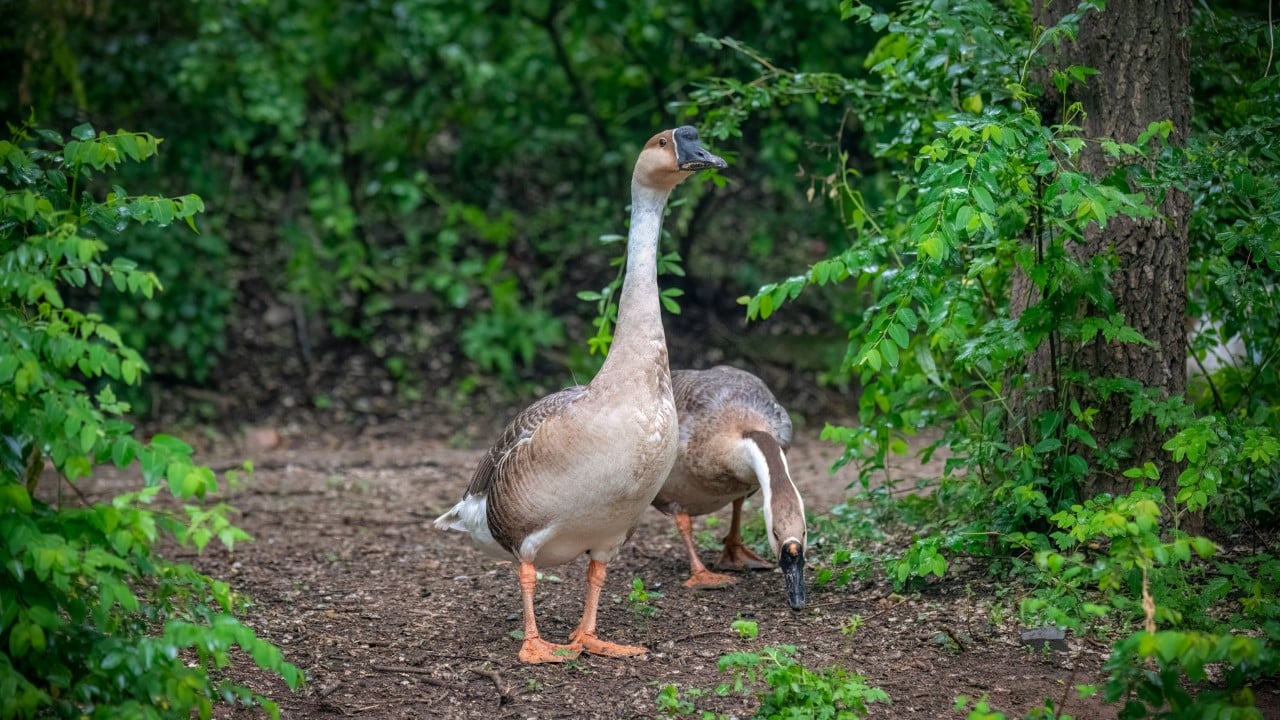
Climate change and agricultural development have brought a new goose population to China with unique migratory patterns, a study has found.
In an article on the Chinese Academy of Sciences website, researchers from the CAS Institute of Zoology said they had discovered a “genetically distinct” population of swan geese that emerged in Beijing over the past century.
They said the timing of their arrival coincided with environmental shifts in the region during the early 20th century – namely climate warming, the expansion of rice fields and the development of irrigated agriculture.
“This study provides new evidence for understanding the underlying mechanisms of how migratory animals respond to rapid environmental changes, and also offers a scientific basis for the conservation and management of migratory waterbirds in East Asia,” according to the article posted on September 17.
The researchers published the findings of their study in the peer-reviewed journal Science Bulletin in mid-June. It was conducted by scientists from the CAS institute’s State Key Laboratory of Animal Biodiversity Conservation and Integrated Pest Management, the Beijing Milu Ecological Research Centre, and other institutions.
15:07
Children now experiencing ‘best weather of their lifetime’, warns Asia’s top climate scientist
The swan goose (Anser cygnoides) is a migratory species endemic to East Asia. Its wild populations mainly breed in Mongolia, Russia and Northeast China, migrating south for the winter along inland and coastal routes.
Due to its dwindling population, the swan goose is listed as an endangered species by the International Union for Conservation of Nature.
While historical records show no evidence of the species breeding locally in Beijing, recent field surveys indicate a dramatic shift, according to the paper.
Breeding populations are now established around the capital and their migratory routes differ markedly from previously recorded swan goose populations elsewhere in the region.
To trace the origins of the Beijing flock, the researchers conducted whole-genome resequencing on samples collected from wild swan geese in Beijing and Mongolia, as well as from domestic geese.
The genetic data revealed that the Beijing birds show a clear divergence from both domestic and other wild populations, though they remain most closely related to wild lineages in eastern Mongolia and Northeast China.
The researchers concluded that the Beijing population had likely splintered from their eastern Mongolian ancestors within the last 100 years.
“The timing of this divergence aligns with significant environmental changes in Beijing and its surrounding areas since the early 20th century,” the Institute of Zoology researchers wrote, highlighting regional warming and the rapid expansion of irrigated agricultural land.
These shifts likely created the ideal ecological conditions for the geese to establish a new local population.
To track the birds’ altered habits, researchers fitted 16 swan geese with GPS transmitters at Beijing’s Milu Park – a natural wetland habitat – during the 2020 and 2022 breeding seasons.
By November 2024, the team had amassed 163,887 tracking data points. The monitoring exposed a distinct “partial migration” pattern: while two-thirds of the flock migrated south in the autumn as expected, the remaining third stayed in Beijing to overwinter.
With the swan goose listed as a Class II state-protected animal in China – covering rare or endangered species – the paper concluded that understanding these rapid shifts in migratory strategies and population dynamics was critical for effective conservation planning.
KioskNews shows a cleaned-up reading view extracted from the publisher’s page — the original always lives on their site, not ours.