How to limit the rat numbers? Train the humans
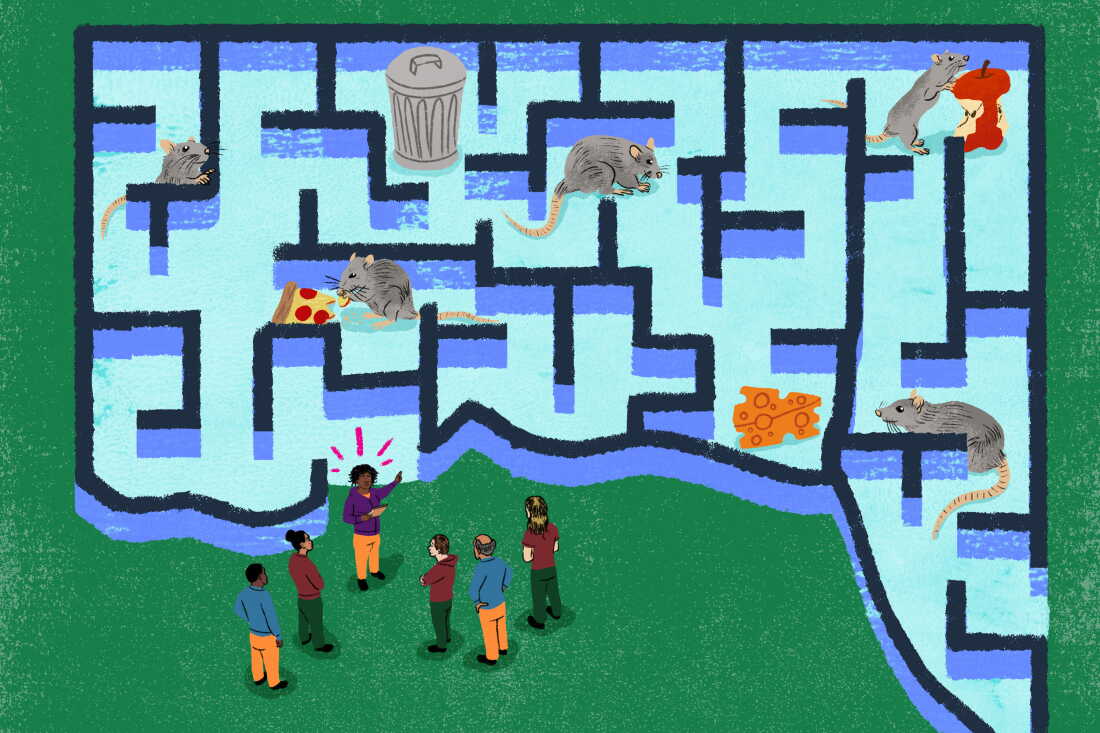
Daniel Fishel for NPR
WASHINGTON, D.C. — They creep through dark alleyways, peer behind trash cans and look inside old takeout containers.
They're not rats, they're Rat Rangers.
These rangers work to educate D.C. residents about ways to prevent rat infestations without using poison. They organized after a 2024 City Wildlife study showed large numbers of D.C. wildlife with blood-clotting issues tested positive for rodenticides.
On a weeknight in late September, head Rat Rangers Holly Gerberich and Gerard Brown, wearing matching t-shirts with a rat on the front, lead two dozen D.C. residents down a dimly lit alley. The group is equipped with head lamps, closed toe-shoes and not nearly enough mosquito spray.
Gerberich, an anthrozoologist, tells the crowd that a healthy pair of healthy brown rats living in a city can produce 15,000 descendants in a single year. Despite the use of poison, traps and even birth control, rat numbers in Washington, D.C. are on the rise.
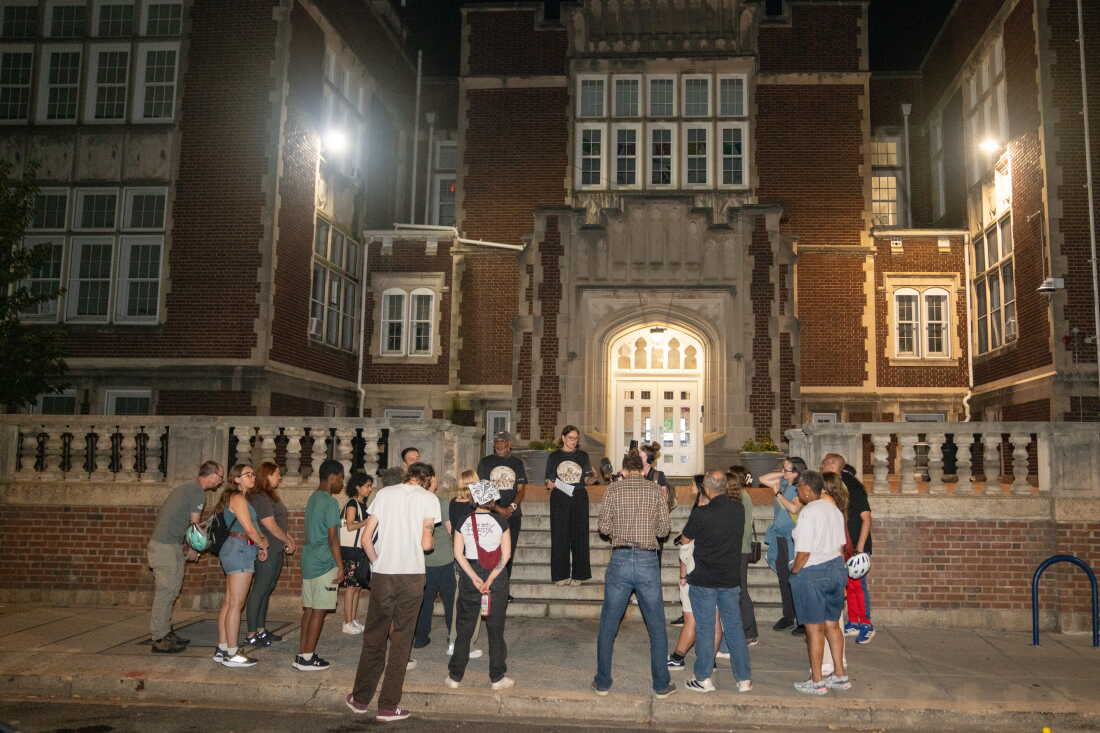
A group gathers for a rat walk in front of the Bruce-Monroe Elementary School in the Park View neighborhood of Washington D.C.. Claire Harbage/NPR hide caption
toggle caption
Claire Harbage/NPR
But rats aren't really the problem, she says, humans are.
"The reason that they're here is because we provide an ideal environment for them," Gerberich says. "How do we make our environment less welcoming to rats?"
The answer, she says, is to get humans to understand why they can't leave garbage and waste out for rodents to feast on. And the best way to do that is to show people the problem up close.

Holly Gerberich, anthrozoologist and urban rodent specialist who leads rat walks with DC Rat Rangers in Washington D.C.. Claire Harbage/NPR hide caption
toggle caption
Claire Harbage/NPR
The group doesn't have to look very hard for signs of rodents. The alleyway they've ventured down is crowded with overflowing garbage cans. They stop next to a squished bag of dog waste, dinner leftovers and the remnants of a stick of butter.
"Sanitation is rodent control, truly," Gerberich explains. "What we're seeing out there is that individuals have a much bigger role in rat population prevention than they realize."
Making the point for her, two long rat tails stick out from the top of a trash can. Sensing trouble, one plump rodent makes a run for it: It leaps on top of a sideways bin, then flings itself from can to can, dropping behind a fence and scurrying off in the dark.
Gerard Brown, head of The Rodent Man Consulting, leads a walk in Park View with the Rat Rangers. Claire Harbage/NPR hide caption
toggle caption
Claire Harbage/NPR
"I kinda like seeing them," says 13-year-old Auggie Merritt. "I think it's pretty cool." In a quick flash, the second rat scampers away. "Oh there's one back there," Auggie whispers.
"As long as I'm standing over here, I'm OK," says Auggie's dad, Dennis Merritt, laughing while taking a considerable step back.
The group peppers the Rat Rangers with dozens of questions. What do rodenticides do to rats? What if we add snakes to the environment? Stray cats? What happened to the rats during COVID-19?
Rats hang out around a group of trash cans, sometimes hiding in a fence, in the Park View neighborhood of Washington D.C.. Claire Harbage/NPR hide caption
toggle caption
Claire Harbage/NPR
Open trash and recycling bins sit in an alley in Park View attracting rats. Claire Harbage/NPR hide caption
toggle caption
Claire Harbage/NPR
Many have empathy for the rats.
Zac Wood and his partner Lydia Barker came on the walk because they wanted to learn about alternatives to using pesticides. (Most rodenticides contain anticoagulants, causing whatever consumes it to painfully bleed to death.)
The couple says they saw rat poison kill a litter of foxes.
"We're animal lovers," says Wood. "It's not just seeing like the foxes, and the hawks, and the owls, and the animals that everyone loves suffer. I don't want the rats to suffer either."
Catrina Valente on the other hand is fed up. Her backyard has been invaded by rats, making it unlivable. (She has the phone numbers of the city's rat inspectors in her phone.)
"Rats are on this world like every other animal," Valente said. "But it's the disease, the uncleanliness, everything – I don't have the sympathy for them."
Rats are a public health risk, and the rangers say they want the rats gone too. Their focus is on behavioral solutions that do not use rodenticides. Their advice is simple — compost or use the kitchen garbage disposal to limit the food waste that is thrown out, put trash in outdoor bins right before pickup and make sure garbage cans are secure.
Andre Pitman, D.C.'s program manager for the Rodent and Vector Control Division, leads a team of 16 inspectors who respond to rat service (elimination) requests every day. They add up to thousands of calls a month. In addition to using poisons, they've started a pilot program, putting out liquid contraceptives in bait stations. But Pitman says even these measures are not enough.
"Not one person can do this," says Pitman. "We can come out and treat all day, but if we aren't removing the contributing factors then they are going to reinfest."
The key is educating residents about removing the rat's food and water sources, he says. Keep the yards and alleyways neat – no clutter, no trash. Other cities, like Boston and New York, are also leaning into human rat education.
The Rat Rangers lead a walk around the Park View neighborhood of Washington D.C. to teach people about rat behavior and prevention. Claire Harbage/NPR hide caption
toggle caption
Claire Harbage/NPR
The Rat Rangers teach residents that the rodents have an excellent sense of smell, they don't like new things, and they quickly develop resistance to poisons.
Bobby Corrigan, a rodentologist in New York City, says these creatures are smart. "[They're] among the most successful animals on planet earth," Corrigan says.
He says humans are right to be thinking how to outwit the rats. If he hears rats in his ceilings, he says, his first thought is not extermination but where did he go wrong, asking: "What did I do to cause you to move into my ceilings?"
So far, the Rat Rangers have taken hundreds of residents through D.C.'s labyrinth of alley ways, past rotting garbage and hungry rodents.
Will it make a difference?
After the rat safari, D.C.-resident Lizzie Stricklin says she's wants to make a group chat with her neighbors, to see what they can do to clean up their corner of the city.
KioskNews shows a cleaned-up reading view extracted from the publisher’s page — the original always lives on their site, not ours.